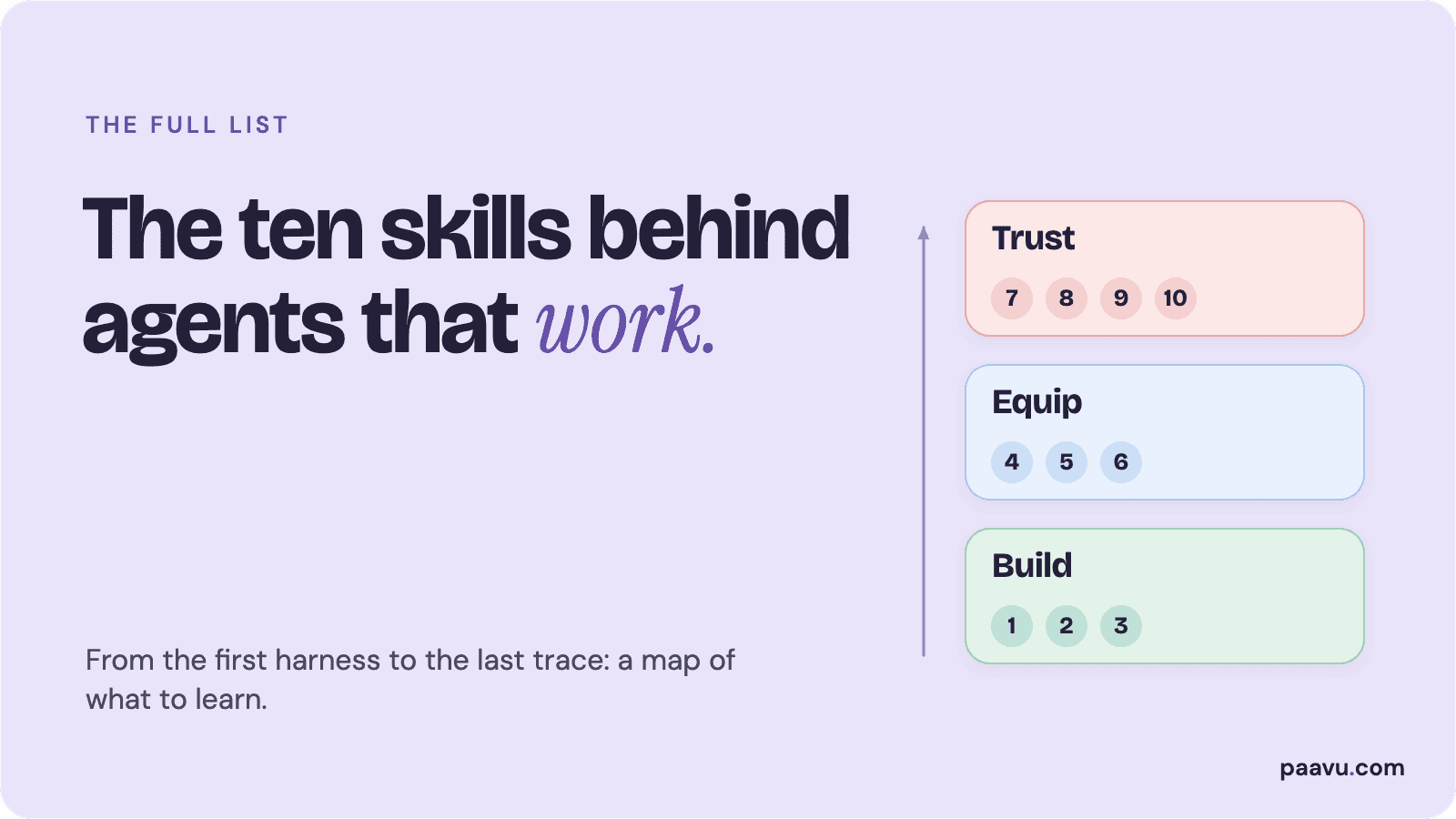
The ten skills behind AI agents that work in production
A demo agent and a production agent are different things. Here is a map of the ten skills that separate them, from the harness around the model to the traces that show what it did.

PAAVU BLOG
Articles on adopting AI, building practical skills, and simplifying processes with AI harnesses and workflow automation.
FEATURED
A demo agent and a production agent are different things. Here is a map of the ten skills that separate them, from the harness around the model to the traces that show what it did.
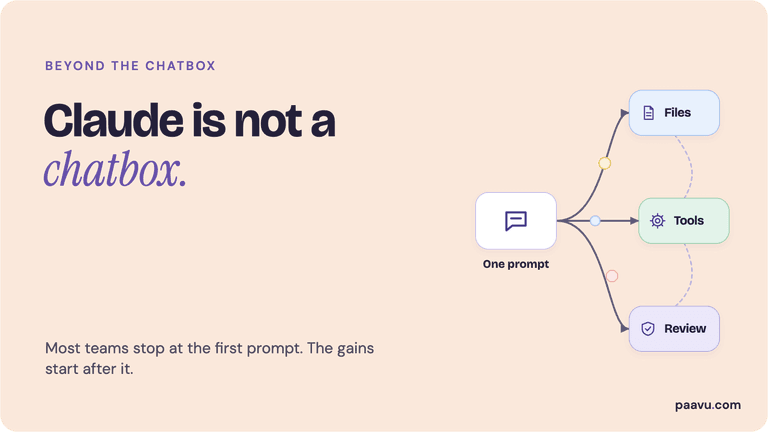
Most teams use Claude and Codex to ask questions and paste the answers somewhere else. The bigger gains come from context, skills and connected agents. Why teams stall, and how to move them on.
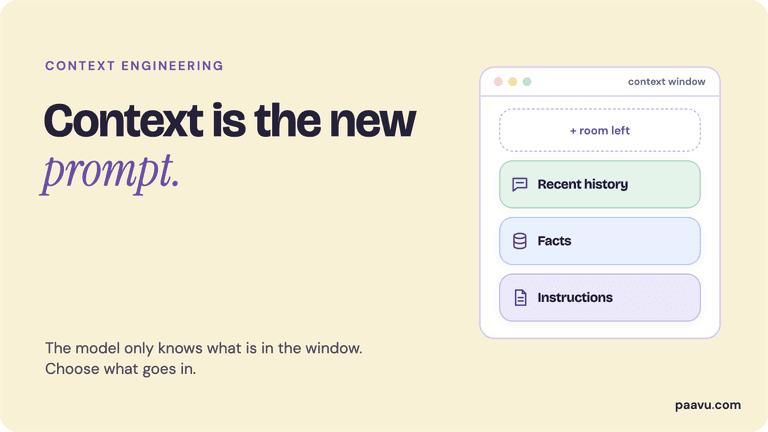
A model only knows what is in its context window. Deciding what goes in, in what order and in what amount, now matters more than clever prompt wording. A practical way to think about it.
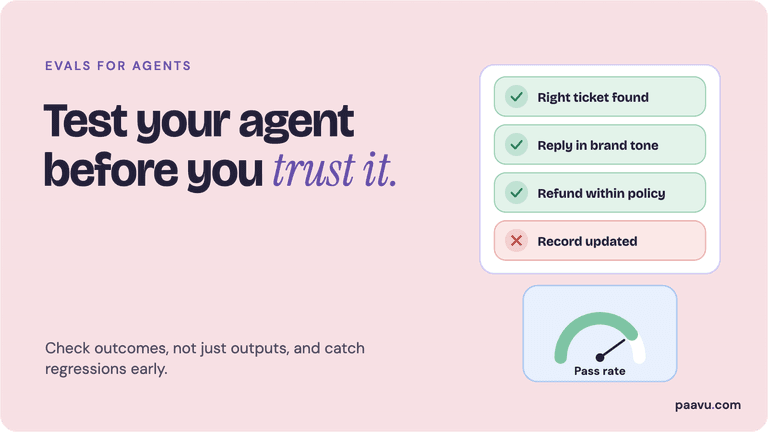
Most teams judge an agent by whether its answers look right. A better test is whether the job got done. How to build a small set of evals and run it after every change.
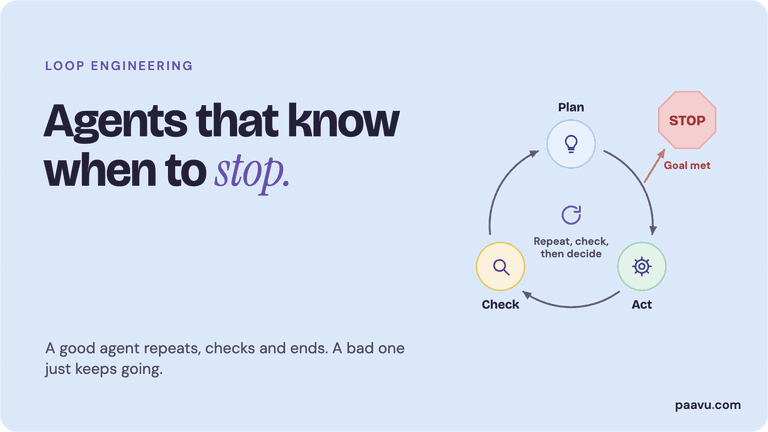
An agent that repeats actions until a goal is met can also repeat them forever. Four rules that keep the loop finite, cheap and easy to debug.
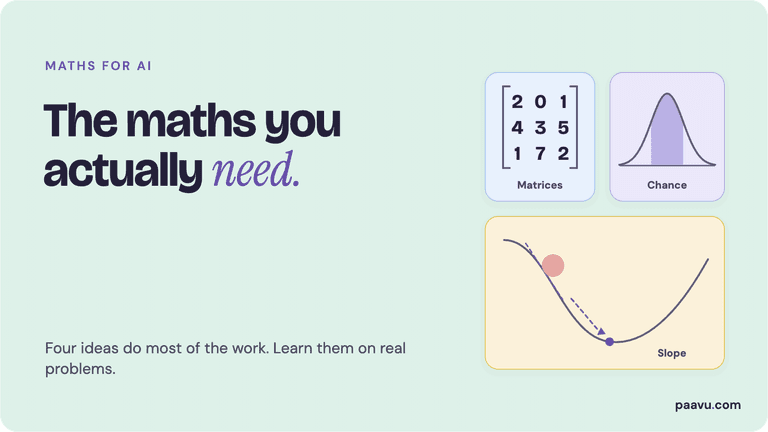
You do not need a semester of lectures. Four ideas, linear algebra, probability, calculus and estimation, cover most of what it takes to follow what AI is doing, and they are best learned by using them.
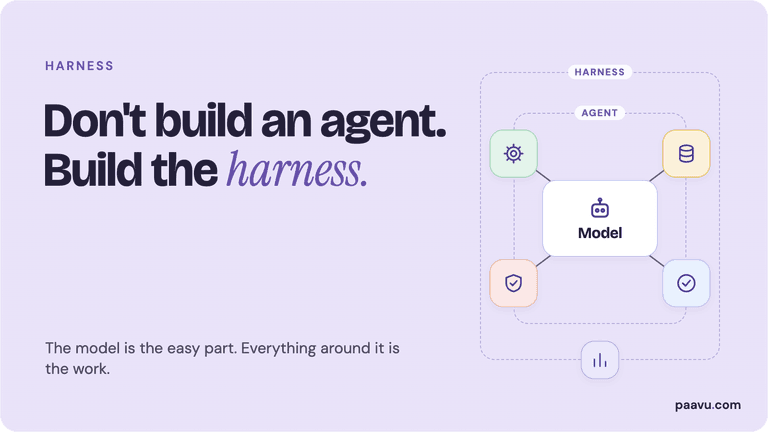
A bot, a workflow and an agent are not the same thing, and none of them is dependable without the harness around it. What a harness is made of and how to start building one.
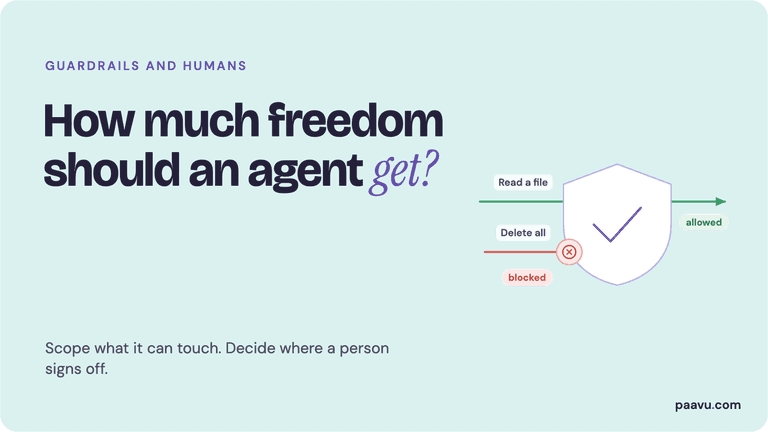
Useful agents need room to act, and safe agents need limits. How to scope what an agent can touch, limit the damage of a mistake, and decide where a person should sign off.
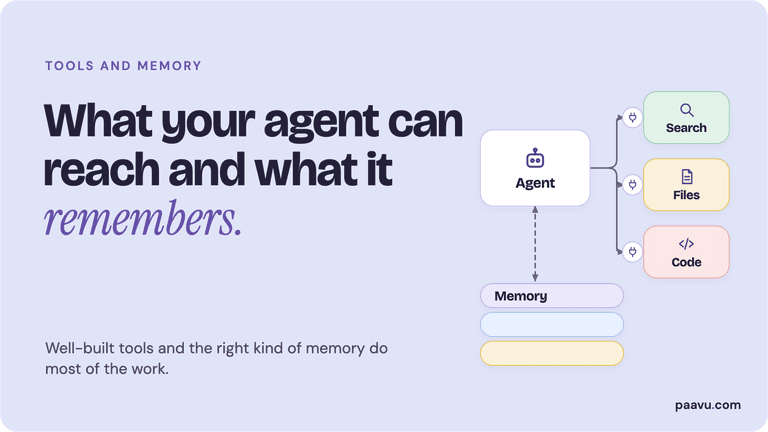
An agent is only as capable as its tools and only as consistent as its memory. How to design tools it can use correctly, and the three kinds of memory worth knowing about.
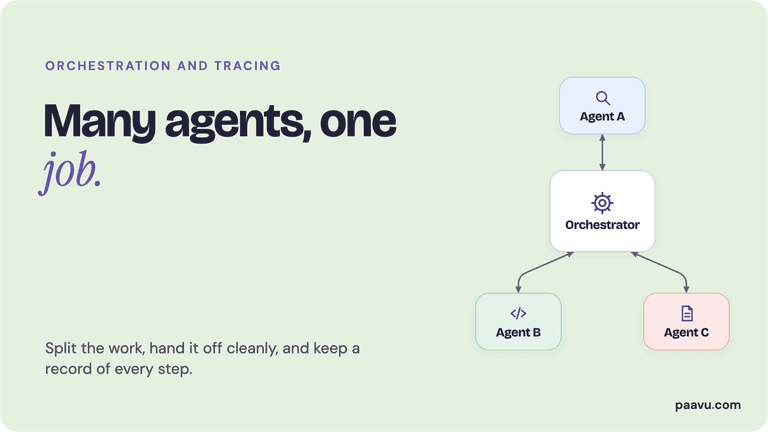
Splitting a task across several agents can make it faster and more reliable, or much harder to debug. Four coordination patterns, and why a trace of every step is what makes them workable.