The ten skills behind AI agents that work in production
A demo agent and a production agent are different things. Here is a map of the ten skills that separate them, from the harness around the model to the traces that show what it did.
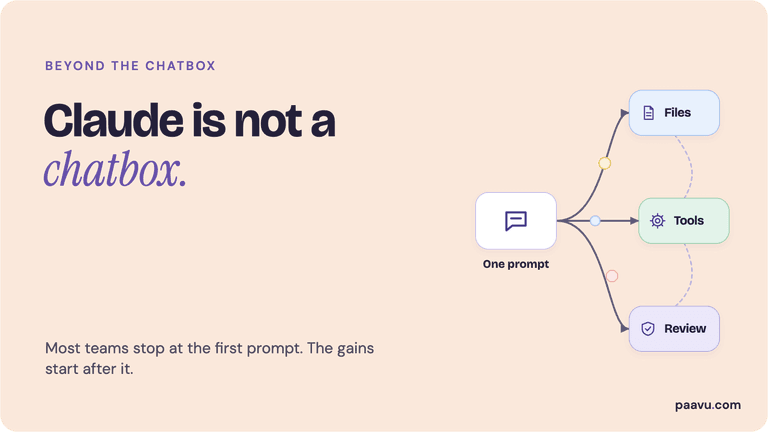
Getting an AI agent to work once is easy. Getting it to work on day two, with real data, real users and nobody watching, is a different job. The gap between those two is a set of engineering skills that have little to do with picking a clever prompt.
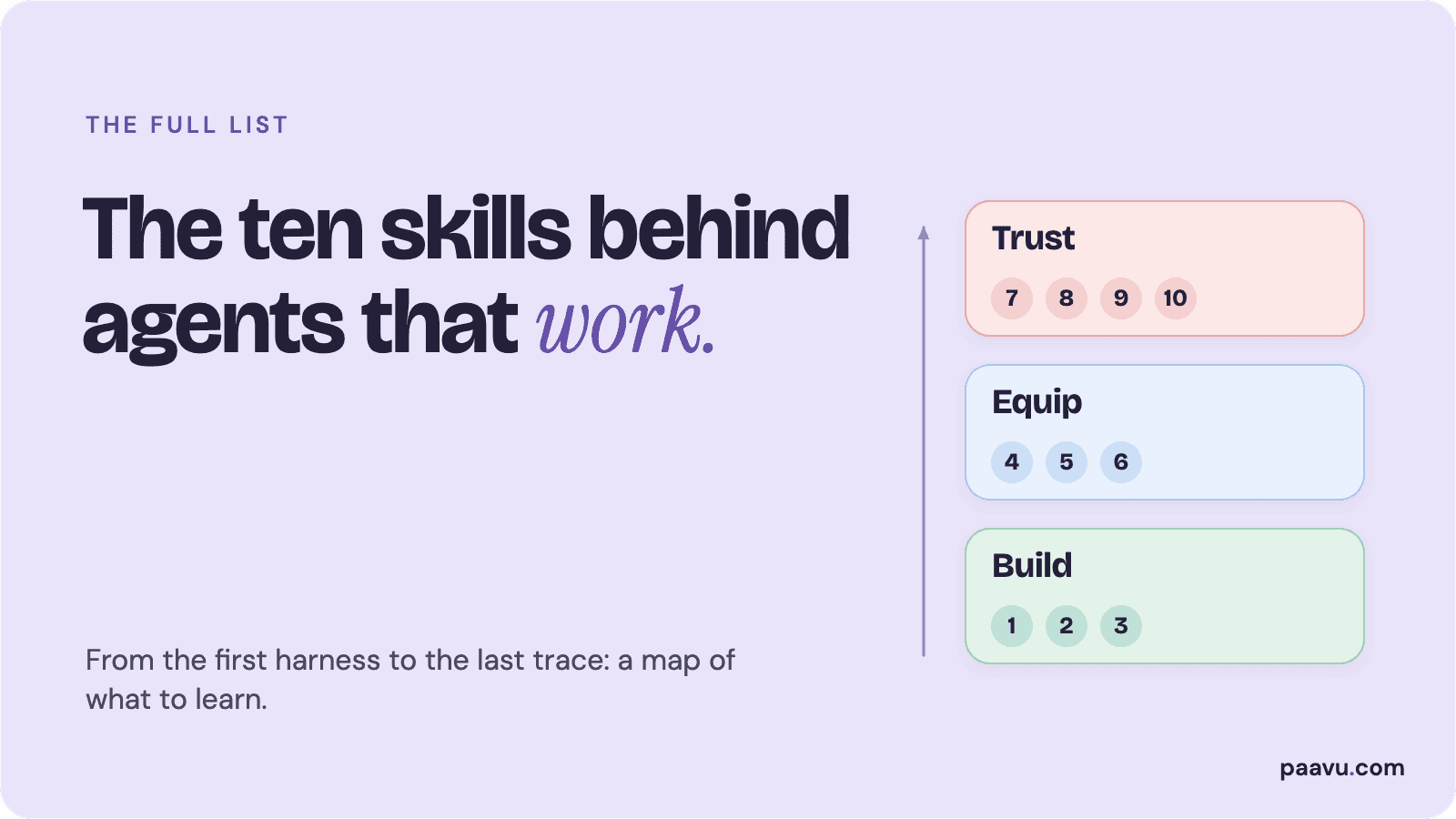
This is a map of ten of them. Each one gets its own post, so treat this as the contents page.
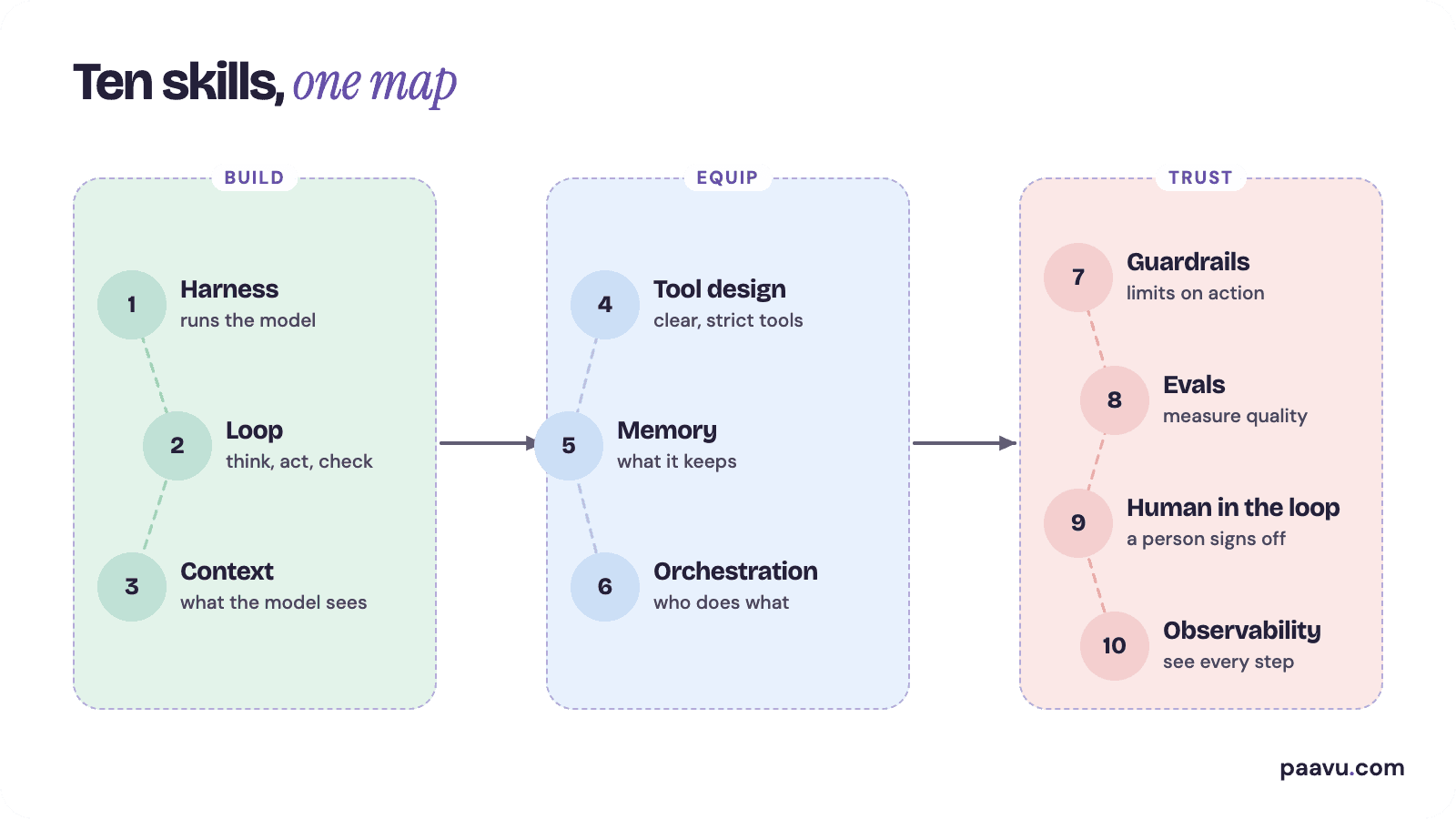
Building the agent
1. Harness. A safe, observable stack around the model: retries, fallbacks, sandboxes and cost limits. Read the harness post.
2. Loop. How the agent repeats, checks its own progress and decides to stop. Agents that know when to stop.
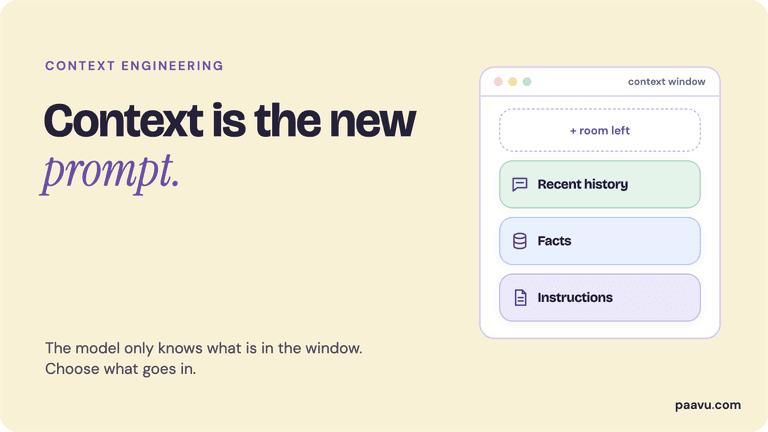
3. Context. Giving the model the right information at the right moment. Context is the new prompt.
Equipping it
4. Tool design and 5. Memory. Tools with clear names and strict inputs, and memory that keeps what matters. Tools and memory.
6. Orchestration. Several agents splitting a job and handing work over cleanly, and 10. Observability, the trace that shows every step. Many agents, one job.
Making it trustworthy
7. Guardrails and 9. Human-in-the-loop. What the agent may touch, and where a person signs off. How much freedom should an agent get.
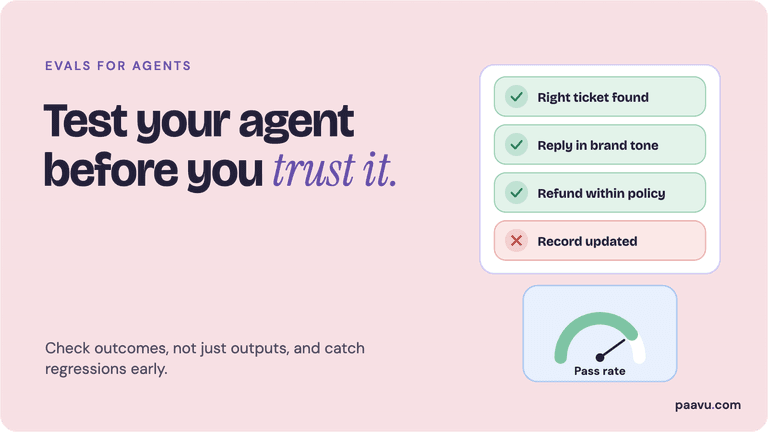
8. Evals. Testing the outcome before you trust the agent, and again after every change. Test your agent before you trust it.
Where to start
You do not need all ten on day one. A sensible order is the harness and the loop first, so the agent is safe and finite, then evals, so you can tell whether it works, and then the rest as the use case grows. Skipping evals is the most common mistake: without them every other improvement is a guess.
If you want help with this on your own workflows, get in touch and we will look at it together.