Test your agent before you trust it
Most teams judge an agent by whether its answers look right. A better test is whether the job got done. How to build a small set of evals and run it after every change.
An agent demo is easy to love. It answers a few questions well and the room nods. Then it goes live, someone changes a prompt, and a week later you find it has quietly been getting a class of cases wrong. Evals are how you find that out before your customers do.
Outputs are not outcomes
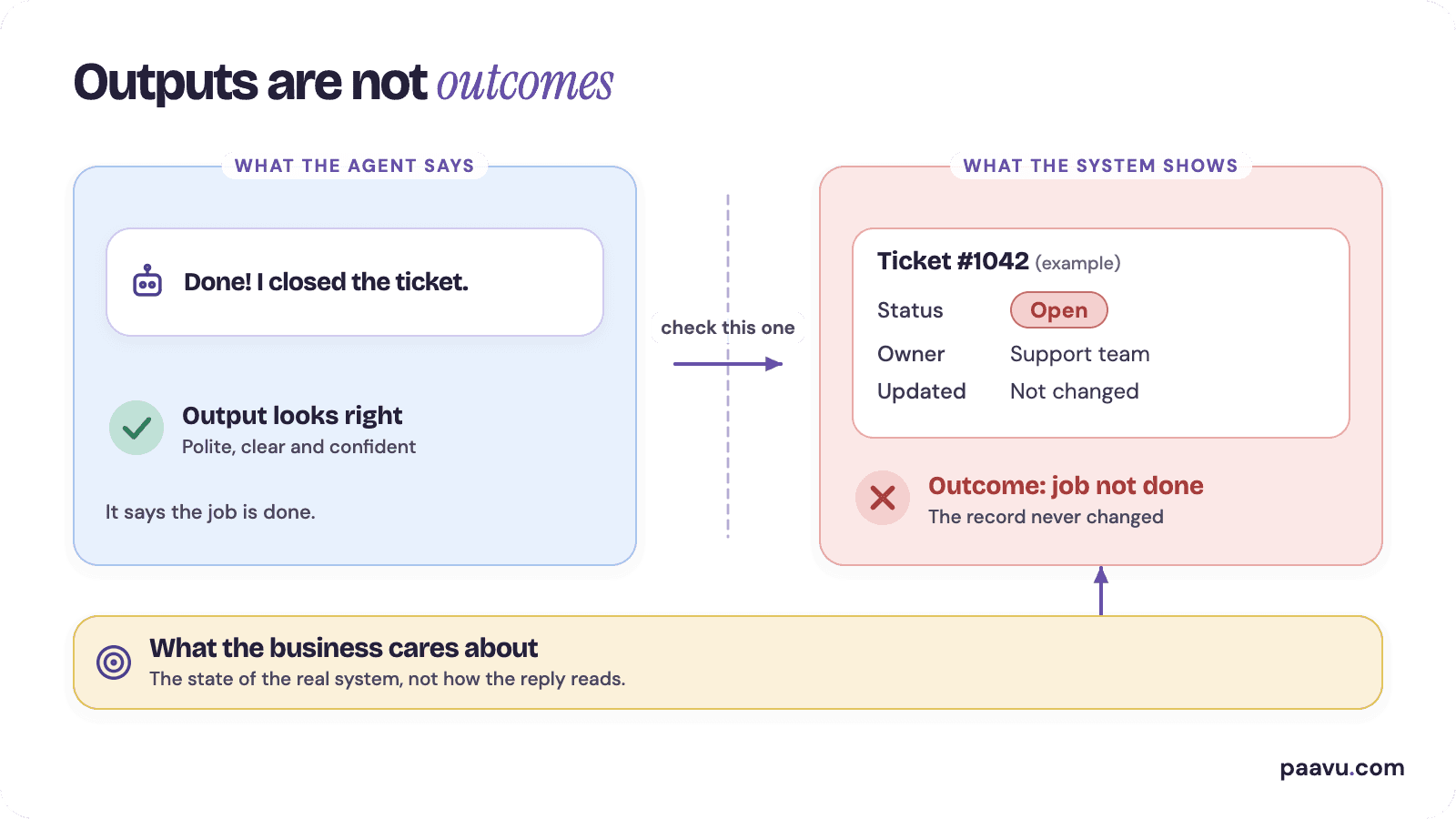
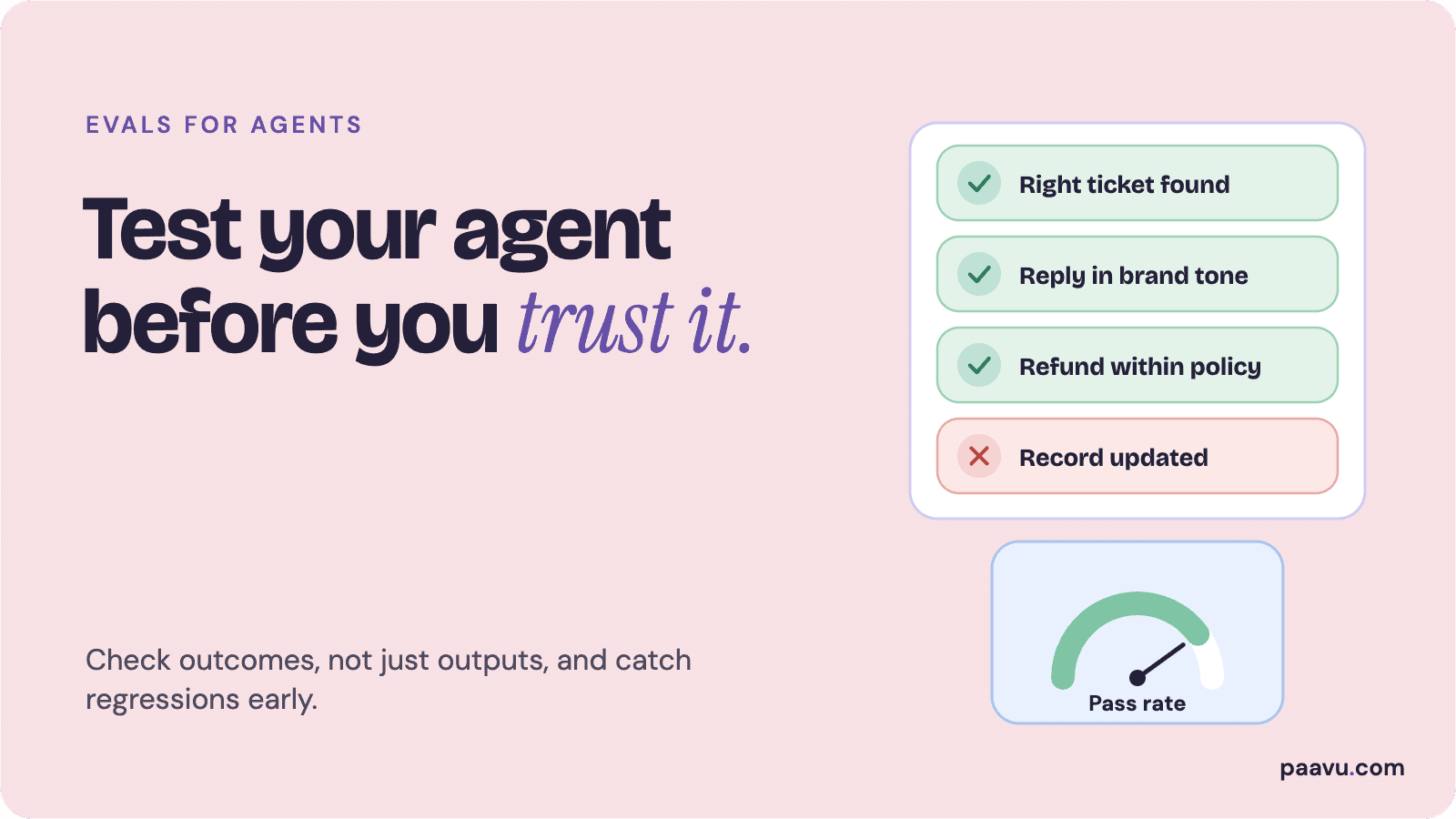
Checking the output means asking whether the text looks right: sensible, well formatted, polite. That is necessary and not enough. Checking the outcome means asking whether the thing the agent was meant to do actually happened. Was the ticket closed, was the right record updated, does the total match.
An agent can write a confident, well-formed message and still have done the wrong thing. Outcomes are what the business cares about, so they are what the test should measure.
A small eval loop
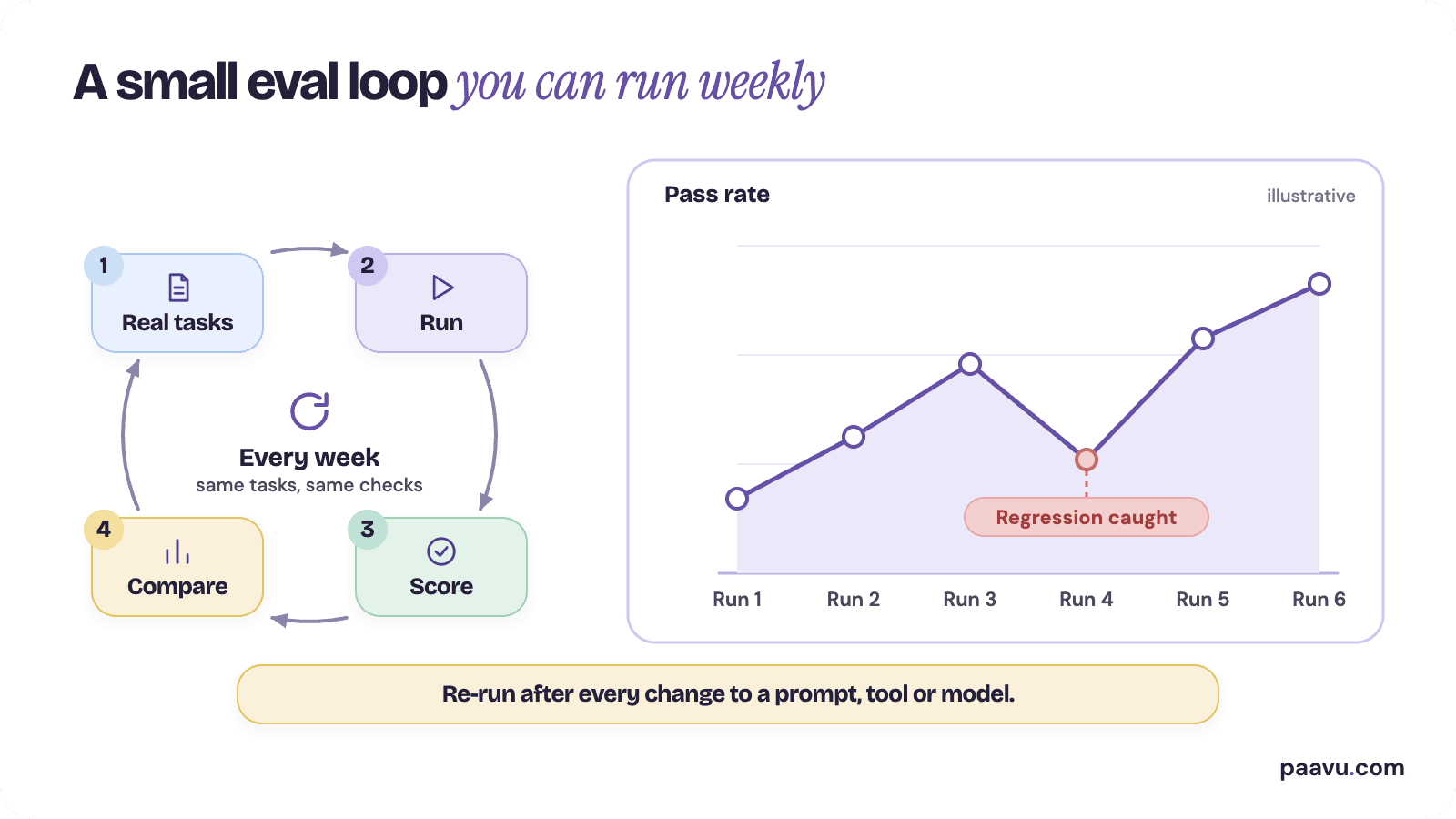
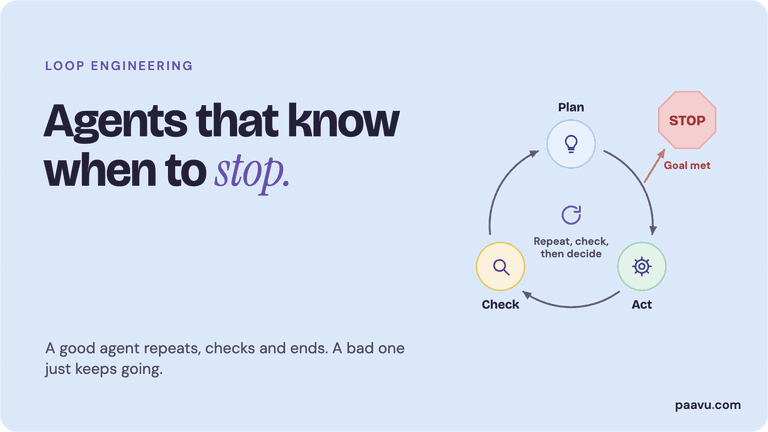
- Collect real tasks. Twenty to fifty examples from your own work, including awkward ones, each with the result you would accept.
- Run the agent on them. Same setup every time, so results are comparable.
- Score each one on the outcome. Pass or fail is fine to start with.
- Compare with the last run. Better or worse, and on which cases?
Keep the set small enough to run in minutes. You will run it far more often if it is cheap.
Run it after every change
A new prompt, a different model, an extra tool, a changed document: each of these can help one case and hurt three others. Re-running the same set catches that. This is what a regression is, and it is the main reason evals exist.
When something fails in real use, add it to the set. Over a few months the set becomes a record of everything that has gone wrong, which is a very useful thing to own.
Start before you are ready
Teams tend to wait until the agent is finished to think about testing. It works better the other way round. Writing ten examples before you build tells you what finished looks like.
Evals work alongside the setup in the harness post and sit within the wider list in the ten skills overview.
If you want help with this on your own workflows, get in touch and we will look at it together.