You don't need to build an agent from scratch. You need a harness.
A bot, a workflow and an agent are not the same thing, and none of them is dependable without the harness around it. What a harness is made of and how to start building one.
Most teams that say they want an AI agent are really describing a result: a task that gets done without someone babysitting it. The agent is only one part of that. The rest is the harness, and it decides whether the result shows up on a Tuesday afternoon with real data, not just in a demo.
A bot, a workflow and an agent are different things
The words get mixed up constantly, so it helps to separate them.
A bot follows keywords, decision trees and canned options. Think of the chat window on an insurance site that cannot get past three questions. Wrapping a language model around it does not change what it is. A chatbot with an LLM is still a chatbot.
A workflow is a pipeline where every step is decided in advance. Tools like n8n and Make have run these for years: pull a row, send an email, post an update. They are dependable because nothing is left to chance.
An agent is different in one way. A model chooses the next step itself and calls tools until it decides the job is done. That freedom is the point, and it is also the risk.
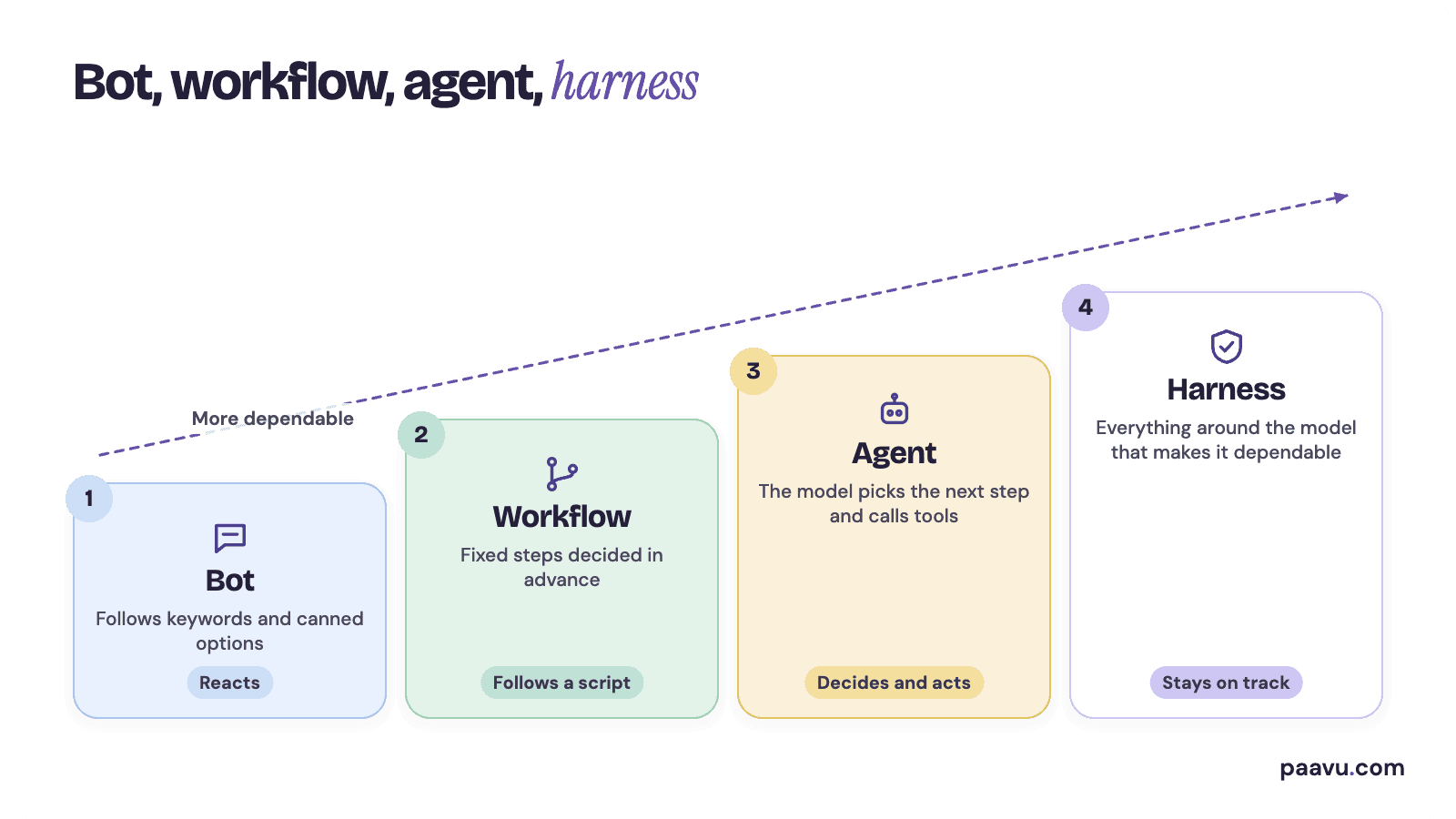
So what is the harness?
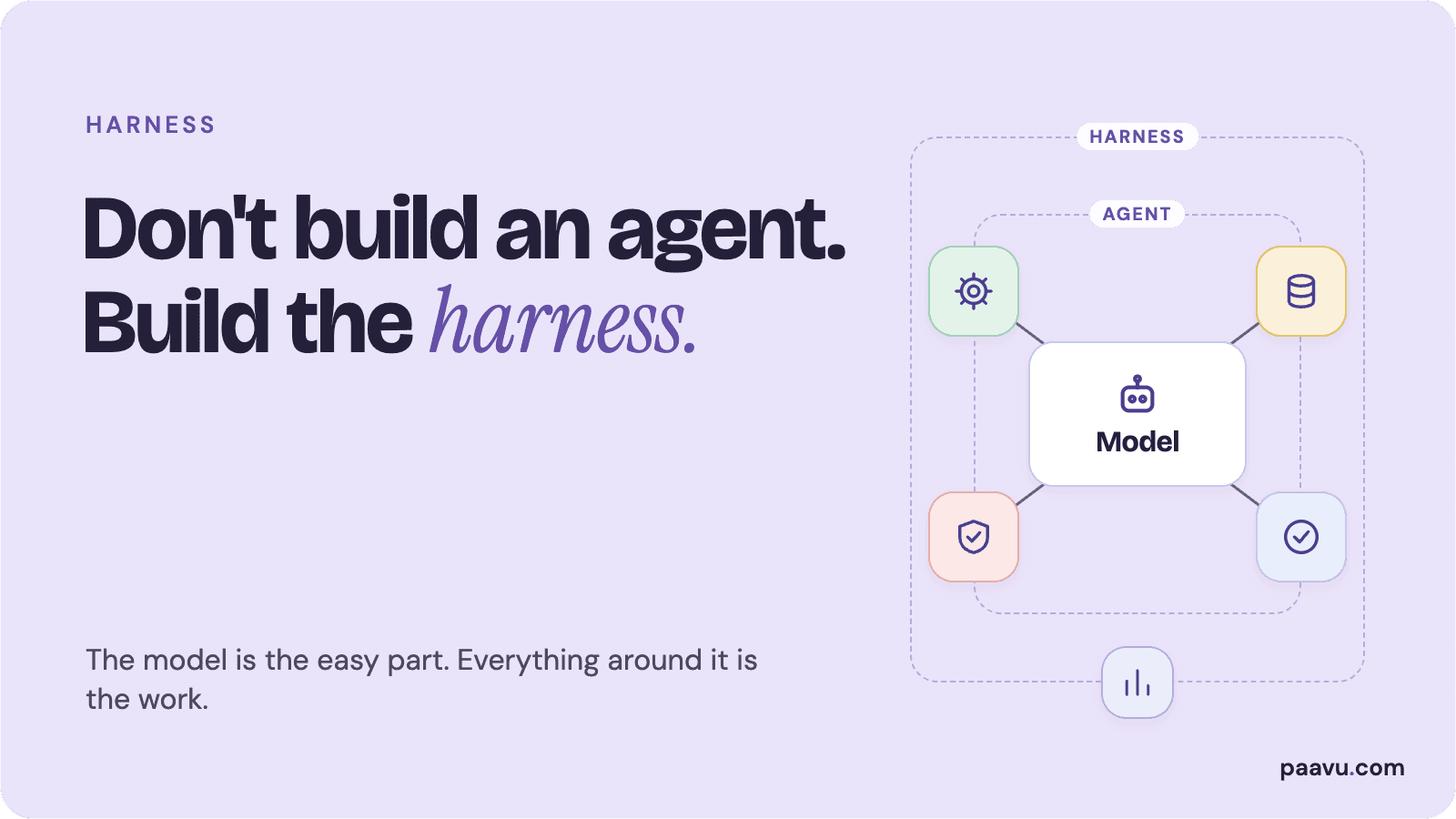
The harness is everything around the model that turns that freedom into something you can rely on. The model reasons. The harness decides what it can touch, what it is told, what it remembers, and what happens when it is wrong.
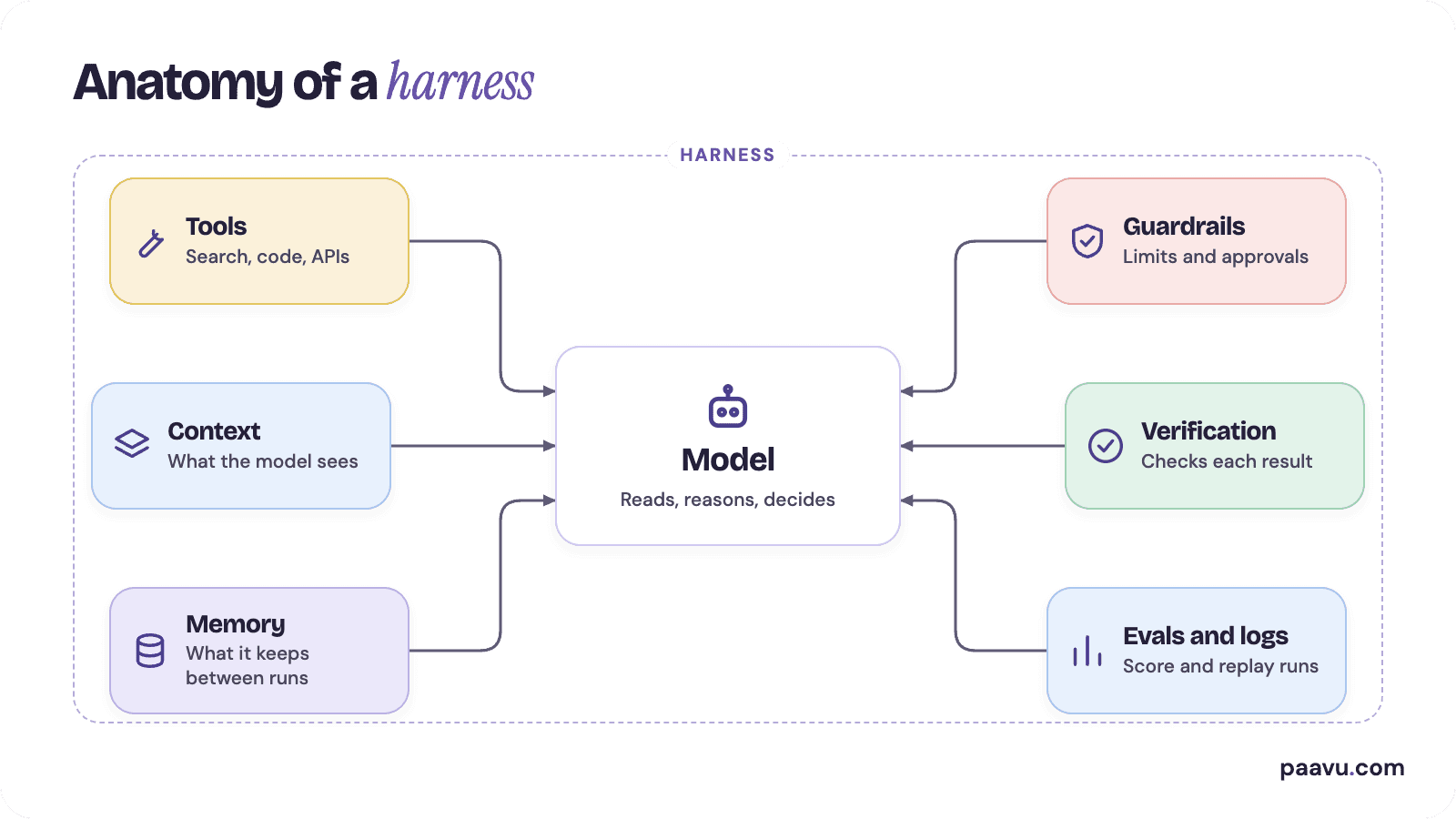
In practice a harness is made of a handful of parts:
- Tools. The actions the agent may take, each with a narrow job and a clear description. A good tool does one thing and fails loudly.
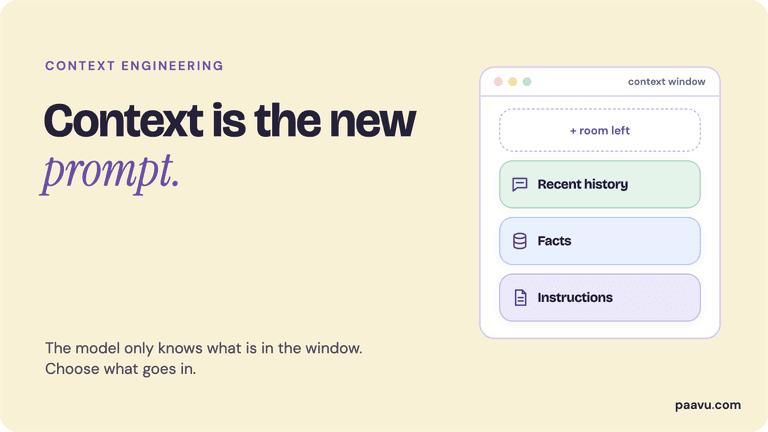
- Context. The facts the model sees for this step. Too little and it guesses; too much and it loses the thread. Choosing what goes in is most of the craft.
- Memory. What carries over between runs: decisions made, preferences learned, work already done.
- Guardrails. Permissions, spending limits, read-only modes and human approval for anything that cannot be undone.
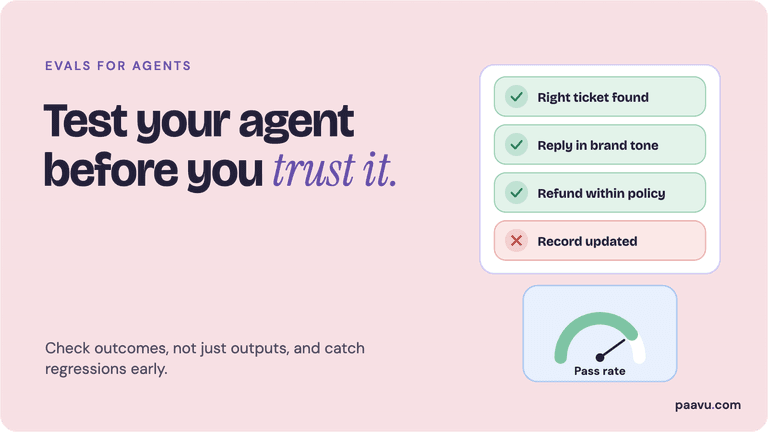
- Verification. A check on the output before it counts. A test, a schema, a second pass, or a person.
- Evals and logs. A fixed set of real tasks you re-run after every change, plus a trail you can read when something goes sideways.
Why the harness matters more than the model
Models improve every few months, and you can swap one for another in an afternoon. Your harness is the part that holds your business rules, your data access and your tolerance for risk. That makes it the asset you are building, and the reason two teams using the same model get very different results.
It also explains why "build an agent from scratch" is usually the wrong first move. The loop that calls a model and runs tools is a few dozen lines. The hard work is deciding what the agent may do, proving that it did it right, and noticing when it stops being right.
Where to start
- Pick one task that a person does every week and can describe in a paragraph.
- Write ten real examples of that task with the answer you would accept. This is your first eval.
- Give the agent the smallest set of tools that can finish the task, read-only wherever possible.
- Add a verification step and a human approval for anything that writes, sends or spends.
- Run the ten examples after every change. Widen the scope only when they pass.
Do that and you will have a harness, even if the agent inside it is simple. It will also be obvious where to invest next, which is more than most pilots can say.
Where we come in
Designing and building harnesses is a large part of what we do at Paavu, from the first scoped task to the evals that keep it honest. If you have a workflow you would like an agent to own, get in touch and we will look at it together.
This post builds on the argument in Marco Rodrigues' article You Don't Need to Build an Agent From Scratch. You Need a Harness Engineer, which is worth reading for the original framing.